Trusted by
















Build portfolio-level risk and resilience programs that capital, regulators, and stakeholders can trust.
Discover how Blue Auditor turns climate risk into actionable, comparable, and financeable insights:
Climate Risk Analysis
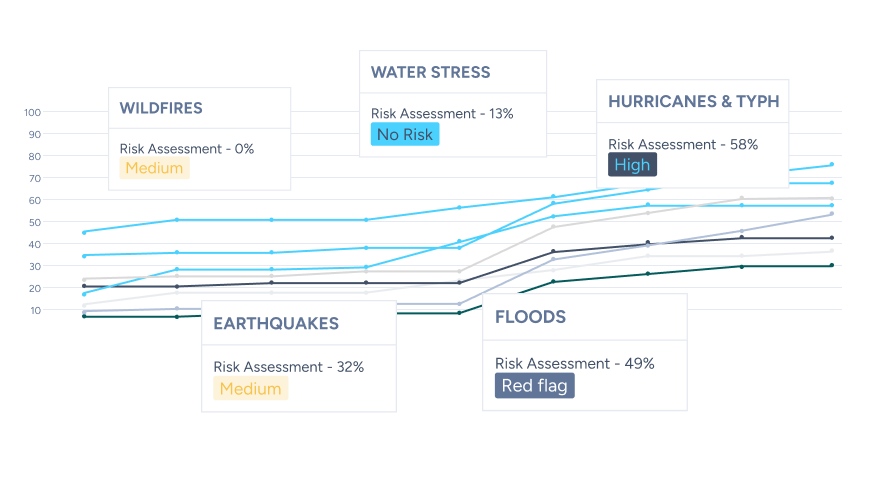
Assess exposure to physical climate risks (heat stress, flooding, wildfires, storms) with IPCC-based forward-looking models (RCP scenarios). Hazard data alone only tells you what is coming, so every asset is also scored for vulnerability, from asset to portfolio level. In a 2050 RCP 8.5 scenario more than 80% of assets show at least one high or red-flag risk, so the question is not who is exposed but which assets it actually hurts.
Outcome: Identify hotspots early, quantify exposure, and ensure compliance with EU Taxonomy “Adaptation” criteria.
Climate Value at Risk (Climate VaR)
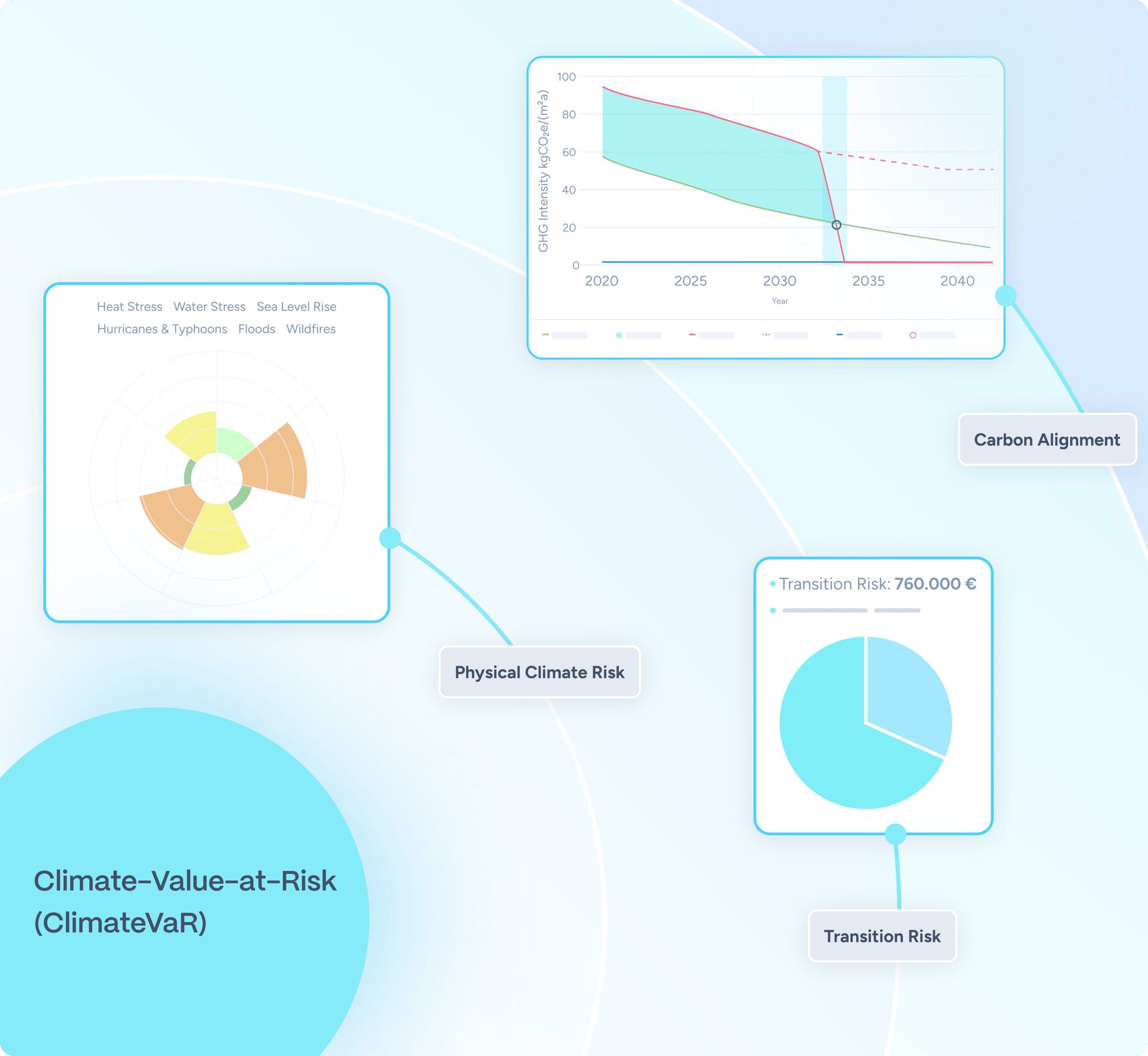
Climate Value-at-Risk integrates physical and transition risk into a single financial risk framework, enabling consistent comparison across assets and portfolios, across scenarios and time horizons.
Outcome: Understand downside exposure, timing of risk realization, and resilience upside under different transition strategies.
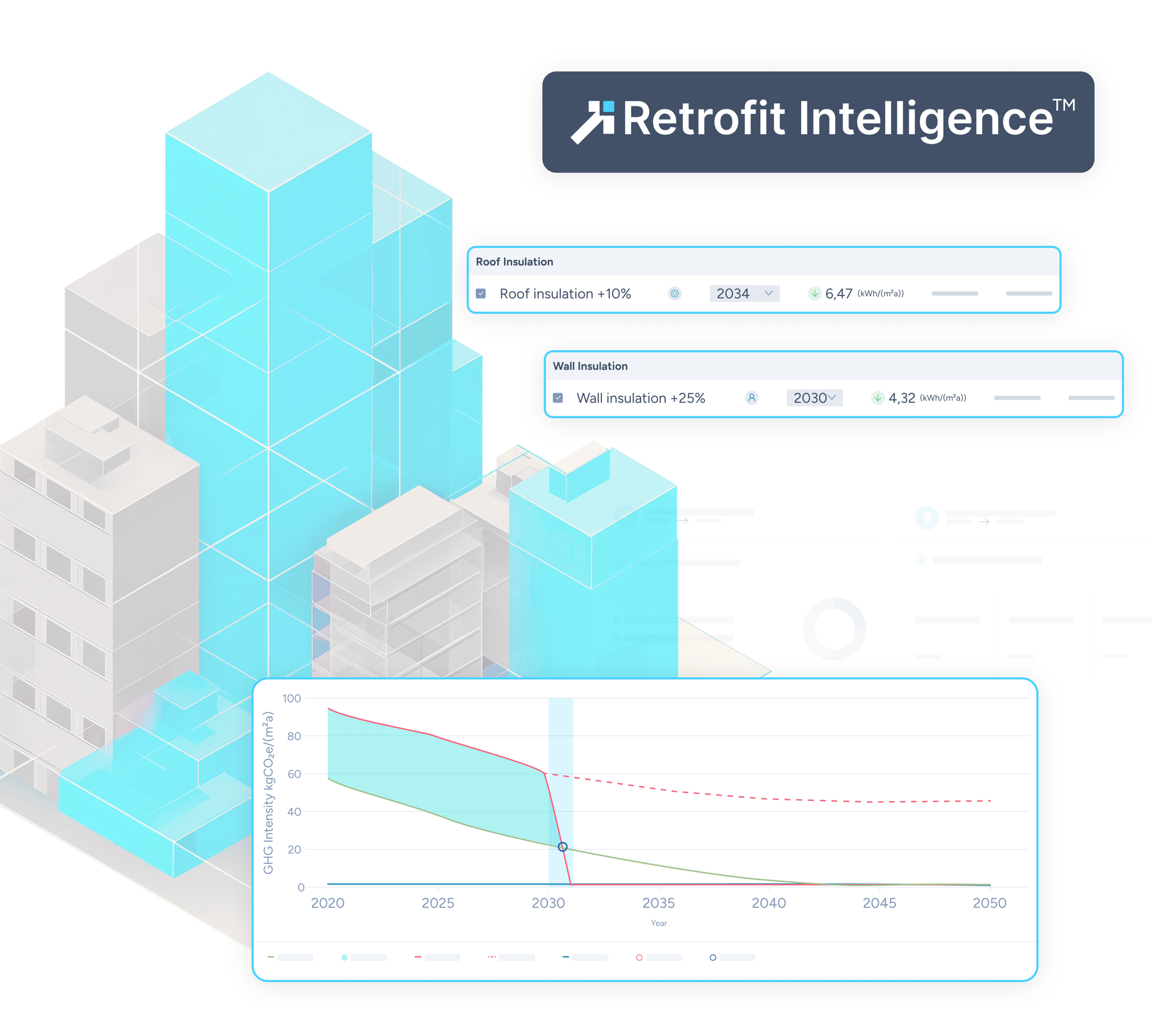
Carbon Misalignment Assessment & Retrofit Intelligence (CRREM Integration)
Assess carbon intensity and energy demand against CRREM decarbonization pathways to identify potential stranding years and transition pressure points.
Outcome: Reposition assets at risk of regulatory or market obsolescence and define credible, financeable decarbonization pathways.
Portfolio-Level Comparability
Analyze and compare risks across multiple assets with standardized indicators and benchmarks.
Outcome: Enable portfolio-wide prioritization, investment sequencing, and divestment decisions based on comparable risk and value profiles.

The Future of the Built Environment. Data as the Catalyst for Change